From the Defense of Colonial Empires to Betrayed Promises of Emancipation: What Lessons Can Be Learned for the Wars of Today?
Author: Claude Kisuka
Abstract
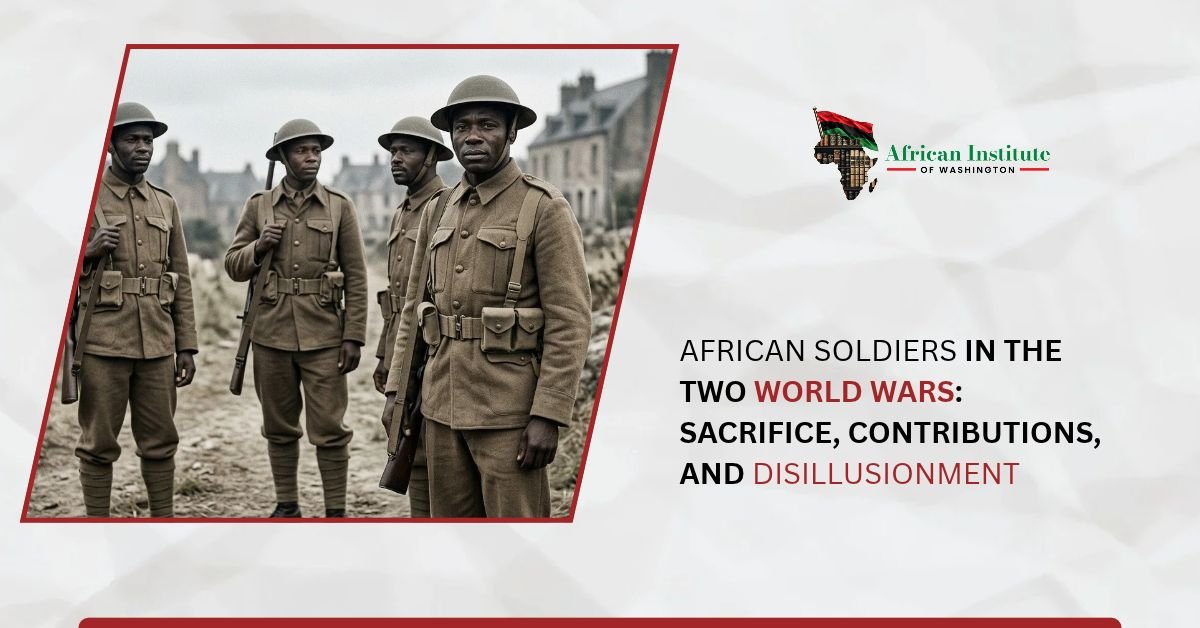
African soldiers played a significant role in both World War I (1914–1918) and World War II (1939–1945). Recruited from territories under European colonial rule, they fought in Europe, Africa, and other theaters of war. Their participation contributed to the military survival of European powers, the defense of colonial empires, and the liberation of territories occupied by Nazi Germany. Yet their sacrifices did not translate into equal citizenship, political independence, or consistent recognition of their contributions. Many encountered racial discrimination, unequal military benefits, coercive recruitment, and the denial or delay of payments owed to them. The massacre of African veterans at Thiaroye, Senegal, on December 1, 1944, illustrates the contradictions between the ideals for which soldiers had fought and the colonial system to which they returned. This article examines African military participation in both world wars, the promises and disappointments experienced by African veterans, and the relationship between military service and the growth of anticolonial consciousness. It concludes by identifying lessons for contemporary African states involved in international military operations, regional conflicts, peacekeeping missions, and wars of national defense.
Keywords: African soldiers, World War I, World War II, colonialism, Tirailleurs Sénégalais, Thiaroye massacre, decolonization, military service, African sovereignty, Pan-Africanism, human rights.
Introduction
The history of the two world wars is often presented primarily through the experiences of European and American soldiers. Military campaigns, battles, strategic decisions, and political negotiations are frequently narrated from the perspective of the major Western powers. Yet millions of people from colonized territories contributed to the war efforts of European empires. Among them were African soldiers whose military service remains essential to understanding the global dimensions of both conflicts.
During World War I, France and Great Britain mobilized African soldiers and laborers to support their military operations. Some served on European battlefields, while others fought in African campaigns or performed essential logistical and labor functions. During World War II, African soldiers again played important roles in defending Allied positions, resisting Axis forces, participating in campaigns in North Africa and Europe, and contributing to the liberation of territories occupied by Nazi Germany.
Their participation raises a fundamental historical question: Why did African soldiers fight and sacrifice their lives to defend European states that continued to deny political freedom and equal rights to many of their own colonial subjects?
The answer cannot be reduced to a single explanation. Some soldiers volunteered because of military ambition, economic opportunity, personal conviction, or loyalty to particular political authorities. Others were conscripted, pressured by colonial administrations, or recruited under circumstances in which genuine freedom of choice was limited. Their motivations varied across regions, periods, and individuals.
Nevertheless, a central contradiction persisted. European governments invoked liberty, civilization, national defense, and the protection of human dignity while maintaining colonial systems characterized by racial hierarchies and political inequality.
This contradiction became especially significant after the wars. African veterans returned home with military experience, broader political awareness, and expectations that their sacrifices would be recognized. Many encountered discrimination, inadequate compensation, and continued colonial domination.
The experiences of African soldiers therefore belong not only to military history but also to the history of colonialism, human rights, nationalism, and decolonization.
This article argues that the two world wars exposed the contradictions of European colonial rule and helped strengthen demands for African political emancipation. It also examines lessons for contemporary wars, particularly the need for African states to ensure that military sacrifice serves clearly defined national interests and produces tangible protections for soldiers and their families.
I. African Soldiers During World War I: Recruitment, Sacrifice, and Colonial Military Power
1. The mobilization of African soldiers
World War I transformed the relationship between European colonial empires and their African populations. France and Great Britain mobilized soldiers, laborers, carriers, and other personnel from their African territories to sustain the war effort.
France recruited African soldiers from French West Africa and French Equatorial Africa, among other territories. The troops commonly known as the Tirailleurs Sénégalais did not come exclusively from Senegal. The designation covered soldiers recruited from a much broader geographical area of French-controlled sub-Saharan Africa.
Some African soldiers volunteered, while others were recruited through conscription or administrative pressure. In certain communities, recruitment generated resistance because military service could separate men from their families, reduce agricultural labor, and expose recruits to dangerous conditions far from home.
Colonial authorities frequently presented military service as an opportunity for advancement, improved status, or recognition. Yet these promises existed within a system in which Africans generally lacked the political rights and equal citizenship enjoyed by European nationals.
Historical research has documented how race, colonial authority, and military necessity shaped the recruitment, treatment, and experiences of African soldiers during the First World War (Echenberg, 1991; Fogarty, 2008; Michel, 2003).
2. Contributions to the war effort
African soldiers served in several military theaters, including the Western Front and campaigns in Africa. They participated in combat, defended positions, reinforced military units, and performed duties essential to the operation of colonial armies.
African laborers and carriers also played an important role in moving supplies, constructing infrastructure, and sustaining military operations in difficult environments.
These contributions should not be reduced to a story of colonial exploitation alone. African soldiers demonstrated courage, discipline, tactical ability, and initiative. Their experiences were diverse, and some developed strong professional identities through military service.
However, their performance did not automatically eliminate racial discrimination. The military institutions in which they served remained embedded in colonial societies that assigned unequal status to Europeans and Africans.
3. Sacrifice without equality
The end of World War I did not produce the political emancipation that many Africans might reasonably have expected after contributing to the defense of European states.
Demobilization brought new challenges. Veterans returned to societies where colonial governments continued to exercise political authority. Their military experience did not generally provide them with equal citizenship, and their expectations concerning compensation and recognition did not always correspond to what colonial administrations delivered.
Fogarty and Killingray (2015) demonstrate the importance of examining African demobilization within its colonial context rather than treating the experiences of African veterans as identical to those of European soldiers.
The fundamental contradiction was clear: African soldiers could be considered indispensable when European powers needed military manpower, yet remain politically subordinate when the fighting ended.
II. African Soldiers During World War II: A Wider Contribution
1. The defense of France and the fight against Nazi Germany
World War II expanded the participation of African soldiers in European conflicts. France mobilized substantial numbers of troops from its African territories. African soldiers fought during the Battle of France in 1940, and many became prisoners of war following the French defeat.
Their experiences were shaped by both military circumstances and racial ideology. Black French soldiers faced particular dangers when captured by German forces. Historical research has documented massacres of Black French soldiers by German troops during the 1940 campaign, reflecting the racialized character of Nazi warfare (Scheck, 2006).
These events demonstrate that African participation in the war was not simply a matter of serving European colonial authorities. African soldiers also confronted a military and political system whose ideology explicitly denied the equality and dignity of people classified as racially inferior.
Their sacrifice must therefore be understood within the broader struggle against Nazi aggression and racial persecution.
2. African participation in Allied campaigns
African troops participated in several campaigns during World War II. Forces recruited from French territories served in North Africa, Italy, and other theaters. African soldiers also served in British imperial forces, including formations recruited from West, East, and Southern Africa.
Their roles included combat, reconnaissance, transport, engineering, logistical support, and other military functions.
The scale and organization of African participation differed across empires and campaigns. Nevertheless, African manpower formed an important component of the Allied war effort.
In France, the military contribution of African soldiers was accompanied by considerable suffering. Many endured combat, imprisonment, separation from their families, and difficult repatriation arrangements. Following liberation, some veterans encountered discriminatory treatment and disputes over their military entitlements.
Echenberg (1985) shows that the difficulties experienced by African soldiers did not end with the defeat of Nazi Germany. In some cases, liberation was followed by further confrontation with the colonial authorities for whom these soldiers had fought.
3. The contradiction between freedom and colonial domination
World War II was presented by the Allied powers as a struggle against aggression, dictatorship, and the destruction of political freedom. The defeat of Nazism helped establish a new international order in which human rights and collective security acquired greater institutional importance.
However, the colonial empires of the victorious European powers did not disappear when the war ended.
African soldiers who had participated in the defense of France and Great Britain returned to societies where political rights remained restricted. Many had witnessed the vulnerability of European military power and experienced societies outside their own colonial environments. These experiences could influence their expectations about citizenship, authority, and the legitimacy of colonial rule.
The contradiction was particularly striking: Africans had helped defend European nations against foreign domination while their own countries remained subject to colonial authority.
This contradiction did not automatically make every African veteran an anticolonial activist. Veterans held different political positions, and some maintained strong ties to the states in whose armies they had served. Nevertheless, the wars contributed to a wider political environment in which colonial domination became increasingly difficult to justify.
III. Broken Promises, Discrimination, and Unequal Recognition
1. Military service did not guarantee equal treatment
Military service creates an expectation that soldiers who perform comparable duties will receive appropriate pay, recognition, and protection under the applicable rules.
For African soldiers serving European empires, this expectation was frequently complicated by racial and colonial hierarchies.
Differences in status, pay, benefits, and administrative treatment reflected a broader structure of inequality. Veterans could find that their service did not grant them the same rights or social recognition afforded to European counterparts.
These inequalities should not be generalized without examining the specific army, period, rank, and entitlement involved. Nevertheless, the broader historical record demonstrates that African military service did not consistently produce equal treatment.
2. The limits of imperial promises
Colonial authorities sometimes presented military service as a route to advancement, honor, or improved standing. Yet military sacrifice did not generally lead to immediate independence or equal political participation.
For many African veterans, the end of war meant a return to colonial administration rather than a new political order.
Their experiences contributed to a growing awareness that the interests of a colonial power and the interests of its colonized populations were not necessarily identical.
This lesson remains important today. A government may describe a military deployment as a contribution to international stability, regional security, or a strategic partnership. Those stated objectives must still be examined against the concrete interests of the soldiers and populations expected to bear the costs.
IV. The Thiaroye Massacre of December 1, 1944: A Symbol of Colonial Disillusionment
1. The historical context
One of the most consequential episodes in the history of African veterans occurred at Thiaroye, near Dakar, in French West Africa, on December 1, 1944.
The soldiers involved included African veterans who had fought for France, been captured during the 1940 campaign, and subsequently been repatriated. They were awaiting demobilization and the settlement of financial claims, including money they believed they were owed.
Disputes concerning pay, allowances, and demobilization arrangements contributed to tensions between the veterans and French military authorities.
The confrontation culminated in French forces opening fire on the African soldiers at the Thiaroye camp.
The number of people killed remains disputed in historical and public discussions. Some scholarly accounts identify 35 deaths, while other investigations and interpretations have questioned whether the official figures fully capture the scale of the killings. The precise number should therefore be treated cautiously rather than presented as definitively settled (Echenberg, 1985; Parent, 2010).
2. Why Thiaroye matters
Thiaroye represents more than a dispute over military pay. It illustrates the contradiction between the sacrifices demanded of colonial soldiers and the unequal treatment they experienced upon returning from war.
These men had served France during a period when the country faced military defeat and occupation. Yet, after surviving combat and captivity, they confronted authorities over the fulfillment of obligations connected to their service.
The massacre exposed the limits of colonial promises and became an enduring symbol of the unequal relationship between France and its African soldiers.
Its historical significance lies partly in the broader political consequences of the event. As Echenberg (1985) explains, Thiaroye and related protests contributed to the erosion of older forms of colonial paternalism and influenced debates about the legitimacy of colonial authority.
3. Historical memory and accountability
Thiaroye also raises questions about the responsibilities of governments toward military personnel and veterans.
When soldiers die in service, when their compensation is disputed, or when military authorities use force against veterans demanding their entitlements, public institutions must be held accountable through credible investigations and historical documentation.
Remembering Thiaroye is therefore not merely an exercise in commemorating the dead. It is also an opportunity to examine the relationship between military authority, racial equality, administrative accountability, and the rights of those who serve.
The event remains relevant to contemporary discussions about military justice, veterans’ welfare, and the treatment of soldiers by the states they have defended.
V. The “Blanchiment” of African Troops During the Liberation of France
The term blanchiment, often translated as the “whitening” of military units, is used in discussions of the replacement or removal of African soldiers from certain French formations during the later stages of World War II.
As Allied forces advanced toward the liberation of France, the composition of some military units changed. In certain cases, African soldiers were demobilized or replaced by European recruits. The circumstances and extent of this process varied, and it should not be interpreted as evidence that every African soldier was removed from every liberation operation.
Nevertheless, the issue raises an important question about historical recognition: whose participation is remembered as central to national liberation, and whose contribution is marginalized?
The liberation of France involved numerous military formations and personnel from different backgrounds. African soldiers were among those who fought for the defeat of Nazi Germany. Their contribution deserves recognition within the full history of the conflict rather than being reduced to a secondary role.
The discussion of blanchiment also demonstrates the importance of careful historical analysis. The term identifies a process affecting certain units; it should not be used to erase the diversity of African military experiences or to suggest that all African soldiers shared the same fate.
Historical memory must recognize both the documented contributions of African soldiers and the complexity of the military decisions made during the liberation of Europe.
VI. From Military Service to Political Consciousness and Decolonization
1. The wars weakened the foundations of colonial legitimacy
The two world wars did not single-handedly cause African decolonization. Anticolonial movements had histories that predated the conflicts, and independence emerged through different political processes across the continent.
Nevertheless, the wars contributed to changes in the relationship between colonial authorities and African populations.
The mobilization of African manpower demonstrated that European empires depended on the resources and participation of the peoples they governed. The wars also revealed the vulnerability of European states and challenged assumptions that colonial powers possessed an unquestionable superiority.
The postwar international environment increasingly emphasized self-determination, human rights, and the legitimacy of independent political communities. These developments created opportunities for African political movements to challenge colonial domination.
2. Veterans and the politics of independence
Military veterans did not constitute a single political movement. Their experiences, interests, and attitudes varied across countries and generations.
Some became involved in political organizations, labor movements, and anticolonial campaigns. Others continued to support existing institutions or pursued individual and family interests. Still others were primarily concerned with pensions, employment, land, and recognition for their service.
Their importance should therefore be understood without assuming that all veterans shared identical political objectives.
Even so, the experience of military service could provide skills, organizational networks, and a heightened awareness of the contradictions between imperial rhetoric and colonial practice.
The wider struggle for decolonization was shaped by numerous factors, including organized political movements, labor mobilization, international pressure, economic change, and the strategic calculations of colonial powers (Cooper, 2002; Hargreaves, 1996).
3. The unfinished legacy
Political independence did not automatically resolve the problems revealed by the two world wars.
African states inherited military institutions, administrative structures, economic dependencies, and international relationships shaped by colonial rule. The challenge of transforming these legacies remains central to debates about African sovereignty and institutional development.
The history of African soldiers therefore raises a continuing question: how can African states build institutions that protect their citizens, recognize their sacrifices, and make decisions based on clearly defined national interests?
Answering that question requires more than historical commemoration. It requires institutional accountability, professional military leadership, transparent public administration, and a political commitment to human dignity.
VII. Lessons for Contemporary Wars
The experiences of African soldiers in the two world wars provide several lessons for modern conflicts.
1. Military sacrifice must be connected to concrete rights
Governments must ensure that military personnel receive the compensation, benefits, medical care, and legal protections to which they are entitled.
Promises made during recruitment or deployment should be clearly defined and honored. Soldiers should not have to rely solely on political goodwill to obtain pay, pensions, disability benefits, or assistance for their families.
African governments should establish transparent systems for managing military compensation and resolving disputes.
2. National sovereignty must remain central to strategic decision-making
International military cooperation can provide important security benefits. States may participate in peacekeeping, counterterrorism, collective defense, or regional stabilization operations.
However, such participation should be based on clearly articulated objectives and a transparent assessment of national interests.
The historical experience of African soldiers demonstrates the risks of assuming that the interests of a powerful partner will automatically coincide with those of a weaker state.
Contemporary African governments should therefore evaluate military agreements according to their legal obligations, strategic consequences, financial costs, and implications for national sovereignty.
3. African states must distinguish partnership from dependency
Military cooperation with foreign governments is not inherently incompatible with sovereignty. Training, intelligence sharing, equipment, and joint operations may strengthen national defense.
The central issue is whether these arrangements develop the capacity of African institutions or create long-term dependencies that limit independent decision-making.
African governments should negotiate agreements that include clear responsibilities, measurable objectives, appropriate oversight, and safeguards against the misuse of national resources.
4. Soldiers must be protected from discrimination
The experiences of African soldiers during the world wars demonstrate how racial and institutional inequalities can undermine the principle that military service deserves equal recognition.
Modern armed forces should establish fair recruitment, promotion, compensation, and disciplinary systems. Ethnic, regional, religious, or racial discrimination should not determine a soldier’s access to opportunities or protection.
Professional military institutions must recognize that discipline and operational effectiveness are compatible with respect for human rights.
5. Accountability is essential to military professionalism
Military authority must operate within a clear legal and institutional framework.
Allegations of unlawful killings, mistreatment, corruption, or abuse of power should be investigated through credible procedures. Victims and families should have access to appropriate remedies.
The lesson of Thiaroye is particularly relevant: when institutions refuse to address legitimate grievances and instead resort to force, they can deepen distrust and damage their own legitimacy.
6. Veterans and military families must not be forgotten
The responsibilities of a state do not end when a soldier leaves active service.
Veterans may require medical care, rehabilitation, psychological support, vocational assistance, and help reintegrating into civilian life. Families may also need support when military service results in death, injury, disability, or prolonged separation.
African states should develop sustainable veteran-support systems rather than treating assistance as an occasional political gesture.
7. Historical memory is part of national dignity
The history of African military participation should be incorporated into educational programs, military academies, museums, public commemorations, and scholarly research.
This should be done through rigorous historical methods that distinguish documented facts from contested interpretations.
Recognizing African soldiers does not require denying the contributions of European, American, Asian, or other Allied forces. It requires a more complete account of the people whose actions shaped the outcome of the wars.
A society that remembers its veterans accurately is better positioned to understand the obligations that military service creates.
8. African solidarity must be supported by strong institutions
Pan-African solidarity is important when African states confront shared security challenges. However, solidarity requires more than declarations of unity.
It depends on effective institutions, accountable leadership, cooperation among governments, and a commitment to protecting civilians.
Contemporary African conflicts should be assessed in light of international humanitarian law, human rights obligations, and the long-term interests of affected populations.
Military operations must have clearly defined objectives and appropriate oversight. They should not become instruments for political repression, exploitation, or the indefinite continuation of conflict.
The historical experience of African soldiers suggests that the dignity of those who serve must be connected to the dignity and security of the populations they are expected to protect.
VIII. Conclusion: Remembering the Sacrifice, Learning from the Disillusionment
African soldiers made important contributions to both world wars. They fought in Europe and Africa, supported military operations, endured captivity, and participated in the struggle against Axis aggression. Their sacrifices were part of the global history of the twentieth century.
Yet their service took place within colonial systems that frequently denied them equal rights and political freedom. The difficulties faced by African veterans after World War I, the discriminatory treatment experienced by some soldiers during and after World War II, and the massacre at Thiaroye demonstrate the distance between military sacrifice and political emancipation.
These experiences did not produce a single political response among African veterans, nor did they alone determine the course of decolonization. Nevertheless, they exposed important contradictions in colonial rule and contributed to the historical environment in which demands for independence gained strength.
For contemporary African states, the lessons are both historical and institutional.
Military service must be accompanied by fair compensation, legal protection, medical care, and long-term support for veterans and their families. International military partnerships must be evaluated according to clearly defined national interests. Military authority must remain accountable, and historical memory must recognize the contributions of soldiers without sacrificing scholarly accuracy.
The central lesson is that a nation must not demand sacrifice from its soldiers while neglecting the rights, dignity, and welfare of those who serve.
The history of African soldiers in the two world wars is therefore not only a record of past suffering. It is also a call for African states to build professional armed forces, accountable institutions, and international partnerships that strengthen rather than undermine national sovereignty.
Remembering these soldiers means more than honoring their courage. It means ensuring that their sacrifices inform a more just relationship between governments, armed forces, veterans, and the people in whose name wars are fought.
References
Ageron, C.-R. (1991). La décolonisation française. Armand Colin.
Betts, R. F. (1991). Uncertain dimensions: Western overseas empires in the twentieth century. University of Minnesota Press.
Cooper, F. (1996). Decolonization and African society: The labor question in French and British Africa. Cambridge University Press.
Cooper, F. (2002). Africa since 1940: The past of the present. Cambridge University Press.
Echenberg, M. (1985). “Morts pour la France”: The African soldier in France during the Second World War. The Journal of African History, 26(4), 363–380. https://doi.org/10.1017/S0021853700028796
Echenberg, M. (1991). Colonial conscripts: The Tirailleurs Sénégalais in French West Africa, 1857–1960. Heinemann.
Fogarty, R. S. (2008). Race and war in France: Colonial subjects in the French army, 1914–1918. Johns Hopkins University Press.
Fogarty, R. S., & Killingray, D. (2015). Demobilization in British and French Africa at the end of the First World War. Journal of Contemporary History, 50(1), 100–123. https://doi.org/10.1177/0022009414552868
Hargreaves, J. D. (1996). Decolonization in Africa (2nd ed.). Longman.
Jackson, J. (2001). France: The dark years, 1940–1944. Oxford University Press.
Michel, M. (2003). Les Africains et la Grande Guerre: L’appel à l’Afrique (1914–1918). Karthala.
Parent, S. (2010). (Re)writing the massacre of Thiaroye. In T. Falola & H. ter Haar (Eds.), Narrating war and peace in Africa (pp. 231–240). Boydell & Brewer.
Scheck, R. (2006). Hitler’s African victims: The German Army massacres of Black French soldiers in 1940. Cambridge University Press.
Scheck, R. (2012). Les prémices de Thiaroye: L’influence de la captivité allemande sur les soldats noirs français à la fin de la Seconde Guerre mondiale. French Colonial History, 13, 73–90. https://doi.org/10.2307/41938223
Thomas, M. (2005). The French empire between the wars: Imperialism, politics and society. Manchester University Press.
United Nations. (1945). Charter of the United Nations.
United Nations. (1948). Universal Declaration of Human Rights.
United Nations. (2005). Basic principles and guidelines on the right to a remedy and reparation for victims of gross violations of international human rights law and serious violations of international humanitarian law (General Assembly Resolution 60/147).
International Committee of the Red Cross. (1949). Geneva Convention relative to the treatment of prisoners of war of 12 August 1949.
Author Biography
Claude Kisuka is a retired United States Army officer, educator, and analyst whose work focuses on leadership, human rights, development, African sovereignty, and international relations. Drawing on his military experience and academic interests, he examines the relationship between institutions, political authority, historical memory, and human dignity.
He is the founder and president of the African Institute of Washington, a Pan-African initiative dedicated to education, development, and human rights. His broader work explores decolonization, Pan-Africanism, African political and institutional development, and the relationship between Africa and international powers.
Through his writing and educational initiatives, he seeks to encourage critical reflection, responsible leadership, and the development of institutions capable of protecting human dignity and strengthening African agency in international affairs.
Author’s Note
This article approaches the military participation of Africans in the two world wars from historical, political, and human-rights perspectives. Its purpose is to recognize African soldiers’ contributions while examining the contradictions between their military service and the colonial systems under which many served.
Three qualifications are important.
First, African soldiers did not constitute a single political or social group. Recruitment methods, military experiences, motivations, and postwar attitudes varied across colonial territories, armies, and individuals. Some enlisted voluntarily, while others experienced conscription or substantial administrative pressure.
Second, the number of people killed at Thiaroye on December 1, 1944, remains contested in the historical record. The figure of 35 deaths appears in influential scholarly accounts, but alternative investigations and interpretations raise questions about whether the complete scale of the killings has been established. This article therefore avoids presenting any single disputed estimate as definitive.
Third, the term blanchiment refers to the replacement or removal of African soldiers from certain French military formations during the later stages of World War II. It should not be interpreted as proof that all African soldiers were removed from every operation associated with the liberation of France.
The article distinguishes established historical events from broader interpretations concerning colonialism, political consciousness, and decolonization. Its conclusions about contemporary wars are analytical lessons drawn from the historical record rather than claims that all modern conflicts reproduce the circumstances of the two world wars.
The ultimate objective is to promote historical understanding, recognize the dignity of African soldiers, and encourage contemporary governments to uphold the rights of military personnel, veterans, and the populations they serve.
Claude Kisuka, PhD
African Institute of Washington
